The graduate paying every month while their balance grows.
This graduate did what graduates are told to do. They studied. They worked. They earned a good salary. They made repayments through PAYE. And still, the balance kept growing.
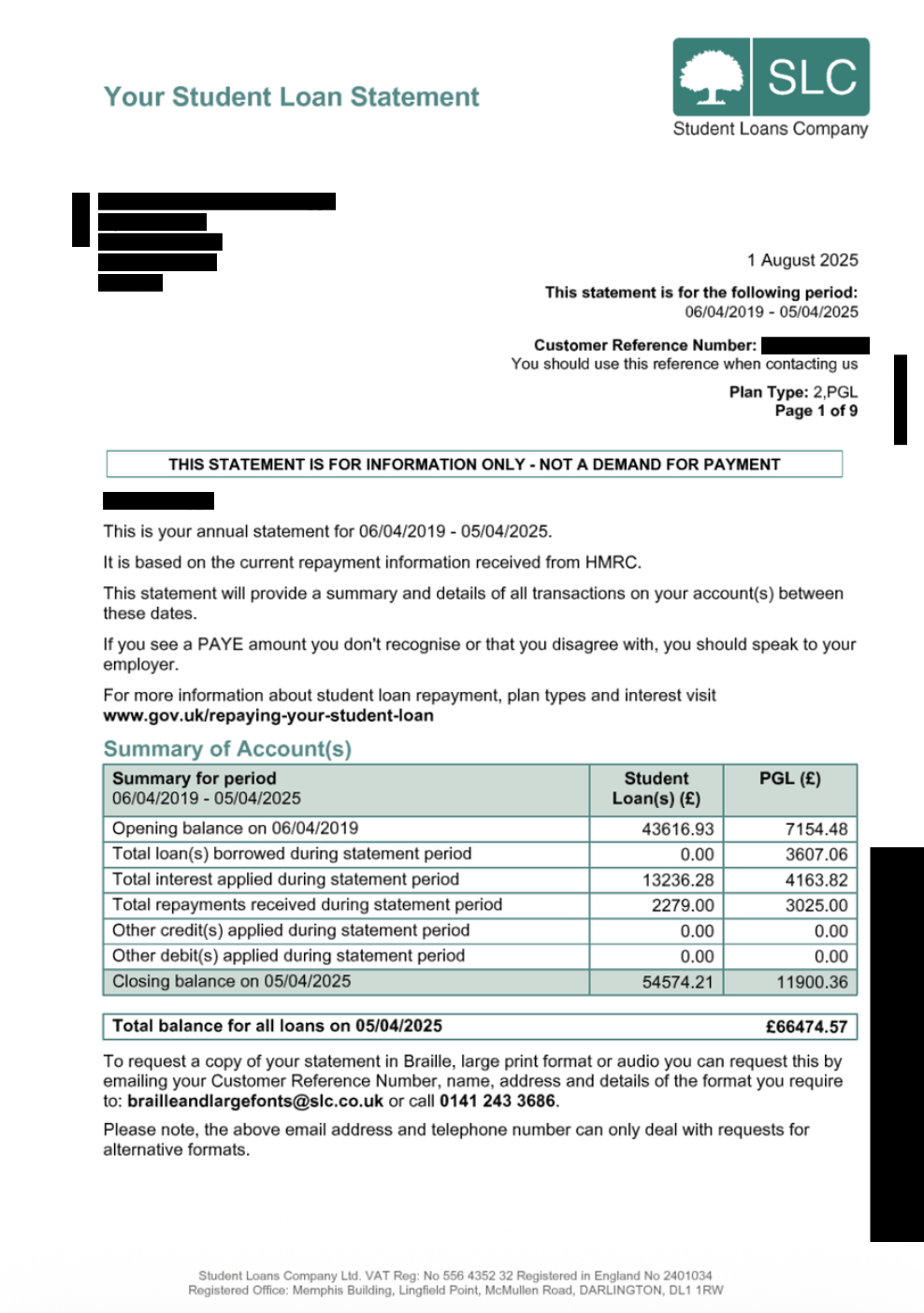
£66,474Outstanding balance shown in the redacted statement
£5,304Repaid through the system so far
£17,400Interest added over the life of the loan
£199Estimated monthly repayment on a £55,000 salary
This graduate did what graduates are told to do
They studied. They worked. They earned a good salary. They made repayments through PAYE.
And still, the balance kept growing.
What this case shows
This is not a story about someone refusing to pay. It is a story about someone paying exactly as the system requires.
The statement shows the core problem with Plan 2: for many middle earners, repayments are real and monthly,
but they are not enough to make the debt behave like a normal loan.
The graduate is repaying through income deductions.
The balance remains higher than the original borrowing.
The system rewards neither responsibility nor progression.
Read the evidence
This case study is based on a redacted Student Loans Company statement. The statement is shown here so readers can see the figures behind the case study.
Names, addresses, customer references, barcodes and other personal identifiers have been removed.
Redacted Student Loans Company statement used for this case study.
This is why Fair Fees is calling for reform
A fair system should not trap people in decades of repayments while their balances grow.
It should set interest at a reasonable level, protect students from retrospective rule changes,
and make sure the cost of higher education is shared fairly between graduates and the wider country.
If this feels wrong, add your name.
Help build the case for a fairer student finance system.